
New Hardware is reader-supported: some links on this page are affiliate links, and as an Amazon Associate New Hardware earns from qualifying purchases at no extra cost to you. Learn more.
Our Top 3 Picks for Ceramic Tile
The best Tile Saw for Ceramic Tile is the DEWALT D24000 Wet Tile Saw, and its 10-Inch blade suits you if you want a portable wet saw for ceramic work.
We went through 10 Tile Saw options to build this list. These 3 are the ones worth your time.

#1 – DEWALT D24000 Wet Tile Saw
Best for: repeated ceramic tile cuts where 1.5 HP and a 10-inch blade matter more than low weight.
Why the DEWALT D24000 Wet Tile Saw is our #1 pick
- Listed at $159.99 in November 2026 – mid-range among those compared; the price moves, so check it
- 4.8 rating from 938 ratings
blade diameter: 10-Inch · maximum cut depth: 3 1/8
Against the other picks on blade diameter, pick #2 states 7-inch and pick #3 states 8 in..
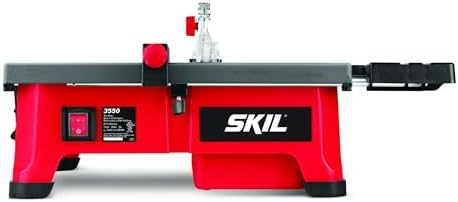
#2 – Skil 3550-02 7-Inch Wet Tile Saw
Best for: you want a 7-inch wet saw with 0, 22.5, and 45-degree bevel cuts and a lighter 22.05-pound frame.
Why the Skil 3550-02 7-Inch Wet Tile Saw is our #2 pick
- Listed at $269.99 in November 2026 – mid-range among those compared; the price moves, so check it
- 4.4 rating from 8,309 ratings
blade diameter: 7-inch · bevel angle range: 0, 22.5 and 45 degrees
To put that blade diameter in context, pick #1 states 10-Inch and pick #3 states 8 in..

#3 – RIDGID R4041S 12 Amp 8 in. Wet Tile Saw
Best for: a lower-cost wet saw for ceramic tile work where 1.2 HP and 0 to 45-degree miter cuts are enough.
Why the RIDGID R4041S 12 Amp 8 in. Wet Tile Saw is our #3 pick
- Listed at $123.50 in November 2026 – entry among those compared; the price moves, so check it
- 4.2 rating from 7 ratings
blade diameter: 8 in. · maximum cut depth: 2-3/4 in
For comparison on blade diameter, pick #1 states 10-Inch and pick #2 states 7-inch.
You can find our full review of the DT-10IN for a deeper look at the specs.
How New Hardware picked: we started from the 25 most-reviewed Tile Saw listings in our retail dataset, removed duplicates, accessories and off-category products, and 20 qualified. The picks on this page were selected from those 20 candidates against this topic’s requirements. The order of the picks reflects fit to this topic; each shows its rating and the number of ratings behind it, so you can weigh how much to trust it. Specifications come from manufacturer listings and ratings from verified Amazon buyer reviews (data checked November 2026).
Our Pick and How the List Was Built
Clean ceramic cuts depend on matching blade size to the tile, because undersizing the saw can turn one pass into several. DEWALT D24000 Wet Tile Saw pairs a 10-Inch blade with 1 5 HP, so it gives you the most headroom of the three picks for repeated ceramic work. Choose the Skil 3550-02 if you want a 7-inch wet saw with bevel cuts at 0, 22.5, and 45 degrees, or choose the RIDGID R4041S if you need the lowest price in the set at around $123.50. We screened 20 Tile Saws at New Hardware and compared 10 for this ceramic-tile page, focusing on blade size, cut depth, bevel range, and buyer appeal. The three picks span $123.5 to $269.99, and the median price of the 10 products in our comparison is $199.50.
D24000 fits you when you want the strongest cut-capacity story without moving into the far pricier 10-inch alternatives that dominate the wider table. Its 3 1/8 maximum cut depth matters because depth is what decides how thick a piece it can pass through in one cut. The RIDGID is the better budget call if you can live with 2-3/4 in depth, and the Skil suits you if bevel settings matter more than raw depth.
The DEWALT D24000 Wet Tile Saw lists at $159.99, which keeps it below the Skil while staying far under the premium 10-inch machines. Its 69-pound frame also signals a different trade-off from the lighter Skil, which weighs 22.05 pounds. If you move the saw between rooms often, that weight difference matters more than a small price gap.
Review the scope to see which specific models and materials are included in this guide.
Check the job requirements to understand the necessary power and blade specs for ceramic.
View our top picks for a quick look at the best-performing saws on the market.
What the Data Says About Tile Saws for Ceramic Tile
- Top pick: DEWALT D24000 Wet Tile Saw at $159.99 (blade diameter: 10-Inch).
- Also picked: Skil 3550-02 7-Inch Wet Tile Saw at $269.99; RIDGID R4041S 12 Amp 8 in. Wet Tile Saw at $123.50.
- We compared 10 Tile Saws, from $104.99 to $1063.19, median $199.50.
- Best buyer rating in the comparison: DEWALT D24000 Wet Tile Saw at 4.8/5 from 938 ratings.
Tile Saws for Ceramic Tile Compared Side by Side
| Product | Price | Rating | blade diameter | motor power | bevel and miter range |
|---|---|---|---|---|---|
| DEWALT D24000 Wet Tile Saw | $159.99 | 4.8 (938 ratings) | 10-Inch | 1 5 HP | 45 bevel |
| Skil 3550-02 7-Inch Wet Tile Saw | $269.99 | 4.4 (8,309 ratings) | 7-inch | Not stated | 0, 22.5, 45 degrees |
| RIDGID R4041S 12 Amp 8 in. Wet Tile Saw | $123.50 | 4.2 (7 ratings) | 8 in. | 1.2 HP | 0 to 45 |
| DEWALT D24000S Wet Tile Saw | $1063.19 | 4.6 (1,095 ratings) | 10-Inch | 1.5 HP | 45 degrees |
| DEWALT D36000 Wet Tile Saw | $999 | 4.6 (453 ratings) | 10 in. | Not stated | — |
| Kantu 83200Q 1 Hp 24 Inch Bridge Wet Tile Saw | $239 | 3.9 (141 ratings) | 8 in. | 1 HP | — |
| DEWALT DWC860W | $132.99 | 4.2 (1,265 ratings) | 4-3/8-Inch | Not stated | 45 degrees |
| VEVOR 10-inch Wet Tile Saw | $786.99 | 3.5 (7 ratings) | 10-inch | Not stated | 0-45 Degrees |
| 7 Inch Wet Tile Saw | $118.99 | 3.6 (21 ratings) | 7 inch | Not stated | 0 to 45 Degrees |
| Ironton 7in. Wet Tile Saw | $104.99 | 4.2 (3 ratings) | 7in. | 2/3 HP | 45 |
Prices are approximate and move frequently – check the current price before deciding. “Not stated” means the manufacturer listing does not give that figure – we do not estimate it.
Among our top picks, the value leader is RIDGID R4041S 12 Amp 8 in. Wet Tile Saw, and that matters for ceramic tile because it pairs the lowest cost per maximum cut depth with a 2-3/4 in cut depth.
Each Pick for Ceramic Tile, Examined One by One
The 3 picks below are reviewed in the same order as the cards above.
DEWALT D24000 Wet Tile Saw
The D24000 made this list because its 10-inch blade, 3 1/8-inch maximum cut depth, and 1.5 HP motor cover the heavier end of ceramic tile work here. It also states a 45-degree bevel capacity, so you can plan for angled edge cuts and a plunge cut, which lets the blade start inside the tile instead of from the edge.
What we like: The 10-inch wheel gives you the largest blade size in this group, and the 3 1/8-inch depth supports thicker tile and repeated cuts. Its 120V supply and 69-pound weight fit a portable wet saw setup, and the included stand, water trays, and cutting cart side extension add useful support for a jobsite or garage layout.
Keep in mind: At around $159.99, it sits in the more capable mid-priced range, not the cheapest one. The 69-pound weight also rules it out if you want the lightest carry between rooms.
Skil 3550-02 7-Inch Wet Tile Saw
The Skil 3550-02 made the list because it is the lightest of the three at 22.05 pounds and uses a 7-inch blade, which suits small bathroom or kitchen ceramic tile projects where easy handling matters more than cut depth. It also states bevel cuts at 0, 22.5, and 45 degrees, so you can make finished corners without moving to a larger saw class.
What we like: The 7-inch blade is a practical step for smaller ceramic tile jobs, and the sliding side extension supports tiles up to 18 x 18 inches. Its Hydro lock water containment system is a useful fit for wet cutting, and the corded electric setup keeps the power source straightforward for a beginner.
Keep in mind: The 7-inch blade gives you less cutting capacity than the 10-inch option above, so it is not the pick for thicker material. At around $269.99, it also costs more than the RIDGID while offering a smaller blade size.
RIDGID R4041S 12 Amp 8 in. Wet Tile Saw
The R4041S made the list because it balances a lower around-$123.50 price with an 8-inch blade, 2-3/4-inch cut depth, and 1.2 HP motor for ceramic tile work that needs more capacity than a 7-inch saw. Its 0 to 45-degree bevel range and 24-inch rip capacity also give you room for backsplash and threshold cuts, including plunge cut work when you need to start a cut away from the edge.
What we like: The 8-inch blade sits between the smaller Skil and the larger DEWALT, so you get a useful middle ground for ceramic tile. The 1.2 HP rating is enough for repeated cuts on ceramic tile, and the removable water tray plus included stand help with cleanup and setup.
Keep in mind: The 7 ratings are thin compared with the other two picks, so you have less buyer feedback to lean on. Its 72.8-pound weight also makes it the least portable of this group.
Study the buying guide to learn the key criteria for choosing the right tool.
For a budget-friendly option, view our review of the 10-inch Wet Tile Saw.
How to Choose a Tile Saw for Ceramic Tile
Blade Size For Ceramic Stock
Look for 8-inch to 10-inch blade size for ceramic stock when you want smoother cuts and more room for thicker tile. The 10-inch DEWALT gives the widest wheel among these picks, while the Skil uses a 7-inch blade and the RIDGID states 8 inches. A continuous-rim diamond blade is the cleaner ceramic choice because its rim suits glazed edges better than a segmented wheel. Porcelain tile is harder than standard ceramic, so blade choice matters even more when the cut line must stay clean. DEWALT’s 10-inch blade and 1.5 HP motor pair the largest wheel here with the strongest drive figure in this group. That combination is the closest match to repeated ceramic cuts without chipping.
Cut Length On Full Tiles
Prioritize cut length on full tiles if your layout uses large-format pieces, because rip capacity decides whether you finish a tile in one pass. The D24000 states a 28-inch max rip capacity with plunge, and the RIDGID lists 24 inches plus 18 inches on the diagonal. The Skil’s sliding side extension supports tiles up to 18 x 18-inch, which suits smaller work more than full-room layouts. If your tile is larger than 18 x 18, the DEWALT’s longer rip figure gives you more room before you need to rework the cut. The QEP 83200Q bridge saw is known for high-capacity straight and diagonal cuts, so it remains the benchmark for larger tile work.
Water Control For Dust Suppression
Choose a wet tile saw for ceramic tile if you want water control for dust suppression, because water-cooled cutting is the workflow that keeps ceramic dust down. The Skil names a Hydro lock water containment system, and the DEWALT includes a submersible pump plus a water pan and side and rear trays. The RIDGID lists a removable water tray, which also points to wet cutting cleanup rather than dry cutting. Do you want the cleaner workflow or the lighter setup? The Skil weighs 22.05 pounds, while the DEWALT weighs 69 pounds, so portability and water management pull in different directions here.
How bevel and miter range affects corner cuts
Use bevel and miter range to decide whether you can finish corners without a second tool. The DEWALT and RIDGID both state 45-degree bevel capacity, and the Skil cuts at 0, 22.5, and 45 degrees. That 45-degree figure is the useful one for mitered edges on ceramic tile, especially around visible transitions. If your layout only needs square cuts, the extra angle range matters less than blade size or cut length. If you need angled edges often, the Skil’s three stated settings give you more position choices than a single 45-degree stop.
Table Stability On Glazed Tile
Weigh table stability on glazed tile against weight, guides, and the cutline hardware that keeps the tile from wandering. The DEWALT states cutline indicator and stainless steel rollers, and it is the heaviest pick here at 69 pounds. The RIDGID adds an aluminum miter and rip guide, while the Skil uses an aluminum table top. That mix matters because glazed tile shows wandering cuts quickly, and stable guidance helps keep the edge where you marked it. Among these options, table stability set these apart more than raw weight alone, because the lighter Skil still names guided support features.
Consult the comparison table to see the technical specifications of every model side by side.
Use the audience checklist to identify which saw best suits your specific skill level and project.
The Jobs Buyers Ask About, Checked Against Each Pick
Each row is a job this page’s buyers ask about, worked out from each pick’s listed motor power and a typical need for the job.
| What you want to do | What it takes | How each pick does |
|---|---|---|
| Make repeated cuts on ceramic tile without bogging down | at least 0.75 to 1hp | DEWALT D24000 Wet Tile Saw: yes (5hp); Skil 3550-02 7-Inch Wet Tile Saw: not stated; RIDGID R4041S 12 Amp 8 in. Wet Tile Saw: yes (1.2hp) |
| Finish a weekend backsplash with a saw that keeps up | at least 0.75 to 1.25hp | DEWALT D24000 Wet Tile Saw: yes (5hp); Skil 3550-02 7-Inch Wet Tile Saw: not stated; RIDGID R4041S 12 Amp 8 in. Wet Tile Saw: only at the easier end (1.2hp) |
The needs are typical figures for each job, not manufacturer claims, and each pick’s result is worked out from its listed specifications. Your own job’s figure is the one that decides.
Who Buys Tile Saws, and What It Really Costs
Who buys a Tile Saw, and what each one needs
- DIY homeowners cutting ceramic wall and floor tile — need a wet saw vs dry cutter setup for cleaner cuts and less dust
- Bathroom remodelers — need enough cut depth for standard ceramic tile and a 45-degree bevel for finished corners
- Flooring installers — need a 10-inch blade class saw for larger ceramic tile and deeper cuts
- Property managers doing unit turnovers — need a 120V corded power saw for normal outlet use on job sites
- Tile-setting apprentices — need a saw with good water containment so slurry stays manageable during practice cuts
What a Tile Saw really costs, and where to buy one
What to budget for on top of the Tile Saw
- Tile blade — the cutting wheel wears and needs replacement
- Water tray or pump — moves water to the blade for wet cutting
- Extension cord — reaches outlets when the work area is far away
- Safety glasses — protects eyes from chips and slurry
- Rubber gloves — helps with wet handling and cleanup
What you can leave out of the budget
- Diamond hole saws — only needed for round openings, not straight ceramic cuts
- Extra polishing pads — ceramic tile usually does not need edge finishing after basic cuts
- Heavy masonry stand — unnecessary if the saw already sits on a stable work surface
- Dust extractor — less useful on a wet saw workflow where water already controls dust
Where this kind of product is normally sold
- Home improvement chains — usually offer return windows, basic warranty help, and bundle pricing with blades or stands
- Tool rental counters — let buyers test the workflow first and avoid full purchase cost if the saw is only needed briefly
- Online tool retailers — often give wider selection, spec filters, and easier price comparison before checkout
- Tile and flooring supply stores — tend to stock category-specific accessories and can help with compatibility questions
Find the setup and warranty notes for information on assembly, power needs, and manufacturer support.
Explore the detailed reviews for an in-depth analysis of each recommended tile saw.
Visit the FAQ to get quick answers to common questions about cutting ceramic.
Getting Started with Any of These Picks
Power, water, and the stand before you start cutting
All three saws need a power source and a wet-cut setup, because each one is a wet saw. The water system keeps the blade cooled and helps hold down slurry, so the saw is not ready without it.
- DEWALT D24000 states a 120V supply, so you need a matching outlet before it can run. Its stand is included, so you do not need to source one separately.
- Skil 3550-02 states corded electric power, so you need an outlet and an extension cord only if the cord cannot reach your work area. Its 7-inch blade size means you also need a diamond blade in that diameter.
- RIDGID R4041S states corded electric power and a stand included, so you need an outlet but not a separate stand. Its 8 in. blade size means any replacement diamond blade must match that diameter.
What to verify before the return window closes
Cover differs by seller and country. The first checks should focus on the parts that affect a wet saw’s first cut.
- Confirm the blade diameter on arrival. A mismatched diamond blade will not fit the arbor, and each saw here uses a different size: 10-inch, 7-inch, and 8 in.
- Confirm the water parts are present and intact. The DEWALT D24000 lists a submersible pump, water pan, side water tray, and rear water tray, and those pieces matter for cooling and spray control.
- Confirm the stand and table hardware are complete where stated. The DEWALT D24000 and RIDGID R4041S both state a stand included, and missing support hardware would stop setup before the first cut.
- Confirm the cord and plug condition on the corded models. The Skil 3550-02 and RIDGID R4041S both state corded electric power, so damaged power parts would block use immediately.
Set the saw on a stable surface, fill the water system, and make one short cut on scrap ceramic tile while the return window is still open.
What Buyers Still Want to Know About Tile Saws for Ceramic Tile
What table size and rip capacity do I need for standard ceramic floor tile?
Standard ceramic floor tile needs a table and rip capacity that match the tile length you plan to cut in one pass. The RIDGID R4041S states a 24 in rip capacity and an 18 in diagonal capacity, while the Skil 3550-02 states sliding side extension support for tiles up to 18 x 18-inch. Think of rip capacity like the width of a doorway: if the opening is too short, the tile will not pass through in one clean move.
How important is a miter guide or bevel cutting for ceramic tile, and do I really need it?
A miter guide or bevel cutting matters when you need angled edges for corners or transitions, and a straight ceramic layout does not need it. The Skil 3550-02 states bevel cuts at 0, 22.5, and 45 degrees, while the DEWALT D24000 states a 45 bevel capacity and the RIDGID R4041S states 0 to 45 degree miter cuts left and right.
Which wet saw for ceramic tile gives the most blade size?
The wet saw for ceramic tile with the largest blade size here is the DEWALT D24000, which states a 10-inch blade. That larger wheel suits deeper cutting potential than the 8-inch RIDGID and the 7-inch Skil, though blade diameter itself does not state cut depth.
Which tile saw suits a small remodel without stalling?
A tile saw that suits a small remodel without stalling needs enough motor power for repeated ceramic cuts. The DEWALT D24000 states 1.5 HP, and the RIDGID R4041S states 1.2 HP, which is enough only at the easier end of the weekend backsplash range given here. The Skil 3550-02 does not state motor power, so its comparison here rests on blade size and bevel options instead.
Beginners should start by viewing the different types of tile saws explained.
Who Should Skip These Tile Saws
If you need a 10-inch blade for large-format ceramic work, these three picks are not the right page. The 4-3/8-inch blade reference marks the smallest common saw class for trim cuts and light-duty masonry, so it is the wrong tool for that scale of job.
You should move to a full-size tile saw or a bridge saw tier instead.