
New Hardware is reader-supported: some links on this page are affiliate links, and as an Amazon Associate New Hardware earns from qualifying purchases at no extra cost to you. Learn more.
Our Top 3 Picks for Large Tile Cuts Under $300
3 picks, 3 different buyers. Find the one whose description sounds like you and stop reading.
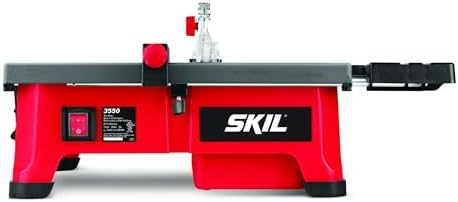
#1 – Skil 3550-02 7-Inch Wet Tile Saw
Best for: you want a 7-inch wet saw under $300 with a 0, 22.5, and 45 degree bevel range for broad DIY tile work.
Why the Skil 3550-02 7-Inch Wet Tile Saw is our #1 pick
- Listed at $269.99 in November 2026 – premium among those compared; the price moves, so check it
- 4.4 rating from 8,309 ratings
blade diameter: 7-inch · bevel angle range: 0, 22.5 and 45 degrees
To put that blade diameter in context, pick #2 states 8 in. and pick #3 states 8 in..

#2 – RIDGID R4041S 12 Amp 8 in. Wet Tile Saw
Best for: you want the lower-priced 8-inch wet saw here and need 2-3/4 in of cut depth for thicker tile or pavers.
Why the RIDGID R4041S 12 Amp 8 in. Wet Tile Saw is our #2 pick
- Listed at $123.50 in November 2026 – entry among those compared; the price moves, so check it
- 4.2 rating from 7 ratings
blade diameter: 8 in. · maximum cut depth: 2-3/4 in
For comparison on blade diameter, pick #1 states 7-inch.

#3 – Kantu 83200Q 1 Hp 24 Inch Bridge Wet Tile Saw
Best for: you want a bridge saw layout with 24 in rip cuts and 18 in diagonal cuts for larger tile formats.
Why the Kantu 83200Q 1 Hp 24 Inch Bridge Wet Tile Saw is our #3 pick
- Listed at $239 in November 2026 – mid-range among those compared; the price moves, so check it
- 3.9 rating from 141 ratings
blade diameter: 8 in. · motor power: 1 HP
Against the other picks on blade diameter, pick #1 states 7-inch.
For a compact option, see our full MK-145 spec breakdown to evaluate its 4-1/2-inch cutting capabilities.
How New Hardware picked: we started from the 25 most-reviewed Tile Saw listings in our retail dataset, removed duplicates, accessories and off-category products, and 20 qualified. The picks on this page were selected from those 20 candidates against this topic’s requirements. The order of the picks reflects fit to this topic; each shows its rating and the number of ratings behind it, so you can weigh how much to trust it. Specifications come from manufacturer listings and ratings from verified Amazon buyer reviews (data checked November 2026).
Our Verdict and How We Chose
Large tile cuts under $300 usually come down to whether you want one saw that handles everyday remodel work or a layout that supports bigger pieces. The Skil 3550-02 7-Inch Wet Tile Saw answers that need with a 7-inch blade and a 45-degree cutting angle, which is enough for finished corner work. Pick the RIDGID R4041S 12 Amp 8 in. Wet Tile Saw if price matters most, or the Kantu 83200Q 1 Hp 24 Inch Bridge Wet Tile Saw if you want a bridge saw for longer rip cuts.
Skil is the model we put first because its format fits broad DIY tile work without leaving the budget band. We screened 20 Tile Saws at New Hardware and compared 3 here for large tile cuts under $300. The shortlist runs from $123.50 to $269.99, so the spread is wide enough to cover both value and higher-spend options.
RIDGID brings an 8 in. blade and 2-3/4 in. maximum cut depth, while Kantu pairs an 8 in. blade with 1 HP and a bridge saw layout. Those details matter if your cuts involve thicker material or a fixed-head workflow. Skil is the lighter-duty choice, but its 22.05 pounds keeps it easier to move than the 72.8-pound RIDGID.
You can see how the TLS1003 performs in our data-driven analysis of its motor and blade capacity.
Tile Saws for Large Tile Cuts Under $300 in Brief, Before You Read the Rest
- Top pick: Skil 3550-02 7-Inch Wet Tile Saw at $269.99 (blade diameter: 7-inch).
- Also picked: RIDGID R4041S 12 Amp 8 in. Wet Tile Saw at $123.50; Kantu 83200Q 1 Hp 24 Inch Bridge Wet Tile Saw at $239.
- Best buyer rating in the comparison: Skil 3550-02 7-Inch Wet Tile Saw at 4.4/5 from 8,309 ratings.
Tile Saws for Large Tile Cuts Under $300: Price, Rating and Specs Compared
| Product | Price | Rating | blade diameter | motor power |
|---|---|---|---|---|
| Skil 3550-02 7-Inch Wet Tile Saw | $269.99 | 4.4 (8,309 ratings) | 7-inch | Not stated |
| RIDGID R4041S 12 Amp 8 in. Wet Tile Saw | $123.50 | 4.2 (7 ratings) | 8 in. | 1.2 HP |
| Kantu 83200Q 1 Hp 24 Inch Bridge Wet Tile Saw | $239 | 3.9 (141 ratings) | 8 in. | 1 HP |
Prices are approximate and move frequently – check the current price before deciding. “Not stated” means the manufacturer listing does not give that figure – we do not estimate it.
Among our top picks, RIDGID R4041S 12 Amp 8 in. Wet Tile Saw is the value leader because it pairs the lowest motor-power cost with a lower entry price for large tile cuts under $300.
Each Pick for Large Tile Cuts Under $300, Reviewed in Detail
The 3 picks below are reviewed in the same order as the cards above.
Skil 3550-02 7-Inch Wet Tile Saw
Skil 3550-02 is the strongest fit here because it pairs a 7-inch wet saw format with a 4.4 rating from 8,309 buyers and a $269.99 price. For large tile cuts under $300, that combination gives you a compact wet-cut setup with enough user feedback to judge the model more confidently than the low-volume alternatives.
What we like: The 7-inch blade size keeps it in the portable class for trim work and lighter large-tile jobs. Its bevel cuts at 0, 22.5, and 45 degrees, so you can plan corner and transition cuts without stepping up to a larger machine. The Hydro lock water containment system also matters for slurry control, which is one of the main pain points in wet cutting.
Keep in mind: This saw is the smallest blade here, so it is the least suited to thicker tile and stone among the three picks. The sliding side extension supports tiles up to 18 x 18-inch, which makes it a better match for moderate-format work than for oversized slabs.
RIDGID R4041S 12 Amp 8 in. Wet Tile Saw
RIDGID R4041S is the value play for large tile cuts under $300 because it combines an 8-inch blade with a $123.50 price and a 1.2 HP motor. That gives you the lowest entry cost in this group while still keeping the larger blade size that matters for deeper cutting setups.
What we like: The 2-3/4 in deep capacity is the clearest advantage in this comparison, since maximum cut depth is the figure that tells you how thick a piece it can pass through in one cut. The 24 in rip capacity and 18 in diagonal capacity also help when tile scoring and feed speed matter on larger pieces, because you have more room to advance the material cleanly through the cut. Think of it like choosing a wider doorway instead of a narrow one; the opening does not make the job easier by itself, but it gives the cut more room to happen.
Keep in mind: The 1.2 HP motor is enough only at the easier end of the range for dense porcelain in a small remodel. It is not the right pick if your main goal is to keep cutting large-format tile without blade wander, since that job calls for more motor headroom than this listing states.
Kantu 83200Q 1 Hp 24 Inch Bridge Wet Tile Saw
Kantu 83200Q rounds out the list because it is the only bridge saw here, and its 24-inch format is the most direct large-cut setup in the group. At $239, it gives you a bridge-style option without leaving this budget band, which matters if you want a different cutting layout than the two wet saws above.
What we like: The bridge saw design changes how the tile is handled, with the head moving over the work instead of the tile moving under a fixed head. That layout suits larger pieces, and the 24 in rip cuts plus 18 in diagonal cuts show why this model belongs in a large-tile shortlist. Its 1 HP motor and 8 in blade keep the spec set straightforward, and the included stand plus water system support the larger-format workflow.
Keep in mind: The 1 HP motor is only enough at the easier end of the range for dense porcelain, so this is not the strongest choice for heavy, repeated cutting loads. It also falls short for keeping large-format tile tracking perfectly straight under tougher conditions, so buyers who need more motor reserve should look higher.
Follow the buying guide to learn the key criteria for selecting your saw.
Compare every feature in the comparison table to see the specs side by side.
Review the setup and warranty notes for information on assembly and manufacturer support.
Consider exploring the alternatives to a tile saw if you need different methods for making precise cuts.
The Specs That Decide a Tile Saw for Large Tile Cuts Under $300
What maximum cut length means for large tile cuts
For maximum cut length, hold out for the rip figure that matches your largest tile in one pass. The Kantu states 24 in. of rip capacity, and the RIDGID also states 24 in.; that is the figure that matters for 24×24 and similar large-format cuts. The Skil’s sliding side extension supports tiles up to 18 x 18 in., so it suits smaller work. DEWALT’s D24000 is the benchmark for 10-inch portable saws, and these picks show a different budget tier: 7-inch and 8-inch blades instead of that common pro-size class. Shorter cuts waste time.
What diagonal tile capacity means for square tile cuts
For diagonal tile capacity, compare the diagonal figure first if you plan corner-to-corner cuts on square tile. The RIDGID lists 18 in. diagonally, and the Kantu also lists 18 in.; that is the useful number for larger square formats. Diagonal capacity often separates the field on large tile saws, because a straight rip can still fail a corner cut. The Skil does not state a diagonal capacity, so it is harder to size for that job from the listing alone. Glass tile needs careful handling, so a stated diagonal guide matters when the cut path gets fragile.
Table Stability On Large Slabs
For table stability on large slabs, weigh the saw type and the listed support parts together. The Skil uses an aluminum table top, the RIDGID includes an aluminum miter and rip guide, and the Kantu is a bridge saw with a six ball-bearing cutting assembly. That bridge layout is the closer match to the QEP 83200Q benchmark for high-capacity straight and diagonal cuts in larger tile. The Kantu’s fold-out stand with wheel attachments also helps explain why it reads as the more slab-friendly layout here. If you move oversized tile often, structure matters more than a small price gap.
Water Control For Long Passes
For water control for long passes, look for a containment system or tray that keeps slurry from spreading. The Skil names a Hydro lock water containment system, and the RIDGID and Kantu both state removable water trays. That matters on long cuts because wet saws rely on water to cool the blade and manage dust. The RIDGID also gives a drop gate feature, which helps keep rip work moving on plank tile. The Kantu adds a high volume water pump and a water system that distributes flow.
Motor Power For Dense Tile
For motor power for dense tile, prioritize the stated horsepower before you worry about blade size alone. The RIDGID lists 1.2 HP, and the Kantu lists 1 HP; both sit in the range that suits easier porcelain work, but the RIDGID gives more headroom. Dense porcelain tile asks for steadier drive, and the comparison here separates on that number more than on blade diameter. The Skil does not state horsepower, so you cannot use its listing to judge load handling from power alone. If your work is mostly porcelain, the motor figure should come before the blade count.
Each Job, What It Takes and How the Picks Do
Each row is a job this page’s buyers ask about, worked out from each pick’s listed motor power and a typical need for the job.
| What you want to do | What it takes | How each pick does |
|---|---|---|
| Handle dense porcelain for a small remodel without stalling | at least 1 to 1.5hp | Skil 3550-02 7-Inch Wet Tile Saw: not stated; RIDGID R4041S 12 Amp 8 in. Wet Tile Saw: only at the easier end (1.2hp); Kantu 83200Q 1 Hp 24 Inch Bridge Wet Tile Saw: only at the easier end (1hp) |
| Keep cutting large-format tile without the blade wandering | at least 1.25 to 1.75hp | Skil 3550-02 7-Inch Wet Tile Saw: not stated; RIDGID R4041S 12 Amp 8 in. Wet Tile Saw: no (1.2hp); Kantu 83200Q 1 Hp 24 Inch Bridge Wet Tile Saw: no (1hp) |
Each need is a typical figure for that job rather than a manufacturer claim, and the picks’ results come from their listed specifications. Where your job is bigger or smaller than the typical one, go by your own figure.
Who Buys Tile Saws, and What It Really Costs
Who buys a Tile Saw, and what each one needs
- DIY tile installers — need a wet saw for large-format tile and a 45-degree bevel for finished corners
- Kitchen remodelers — need enough rip capacity to handle big floor and backsplash tile in one pass
- Small-scale landlords — need a 120V corded saw for apartment repairs without special power setup
- Ceramic art students — need a wet cutter for cleaner cuts on glazed tile and stone pieces
- Bathroom renovators — need a saw that handles thicker tile and a stable water-cooled workflow
What a Tile Saw really costs, and where to buy one
What to budget for on top of the Tile Saw
- Replacement blade — wears down and must match the tile material being cut
- Water tray or pump — moves water to the blade for wet cutting
- Extension cord — reaches outlets when the saw’s cord is too short
- Eye and ear protection — helps with slurry splash and cutting noise
- Tile spacers and layout tools — keep cuts and placement aligned during installation
What you can leave out of the budget
- Extra blade set — unnecessary if you are only cutting one tile type
- Dust extraction attachment — not needed for wet saw workflows
- Stand or cart — unnecessary if the saw already sits securely on a bench
- Specialized masonry blade pack — unnecessary when you are not cutting brick or concrete
Where this kind of product is normally sold
- Home improvement chains — common return windows and straightforward warranty handling for bulky tools
- Tool specialty retailers — wider accessory bundling and clearer spec filtering for cut depth and bevel range
- Online marketplaces — broad price comparison and easier side-by-side feature checking
- Tile supply stores — staff familiar with wet saw use and tile-specific accessory matching
- General hardware stores — convenient pickup and basic exchange policies for local buyers
What These Tile Saws Need, and What to Check on Arrival
What these tile saws need before they work
All three picks need a corded electric connection, so you need power at the work area before any cut starts. A wet saw also needs water management, and the Skil and RIDGID both state wet-saw setups.
- Skil 3550-02 7-Inch Wet Tile Saw: its 7-inch blade size means you need a 7-inch diamond blade if you plan to replace the cutting wheel.
- RIDGID R4041S 12 Amp 8 in. Wet Tile Saw: the 8 in. blade diameter calls for an 8-inch diamond blade, and its stand included note means you do not need to budget for a separate stand.
- Kantu 83200Q 1 Hp 24 Inch Bridge Wet Tile Saw: the bridge saw format and 8 in. blade size make it the one here that is built around a larger straight-cut setup.
- Skil 3550-02 and RIDGID R4041S both state wet-saw use, so a continuous-rim diamond blade is the blade style to look for if you want cleaner wet cuts.
What to check on arrival with a large tile saw under $300
Cover varies by seller and country, so the first checks should focus on the parts that matter most for a wet saw and a large-cut setup.
- Confirm the blade size on the box and in the parts bag. The Skil uses 7 inches, while the RIDGID and Kantu use 8 in., and the wrong wheel will stop the saw from working as intended.
- Confirm the water system parts are present and undamaged. The Skil states Hydro lock water containment system, and the Kantu lists a high volume water pump plus a removable water tray; those parts matter because wet cutting depends on splash control.
- Confirm the stand and support hardware if your model includes one. The RIDGID and Kantu both state stand included: Yes, and a missing stand changes how you set up a bridge or large-format cut station.
- Confirm the cord and plug condition before the first cut. These are corded electric saws, so damaged power hardware is a bigger problem than cosmetic box damage, especially for wet work where GFCI protection matters.
On the day it arrives, plug it into a GFCI-protected outlet, fill the water system, and make one short cut in scrap tile before the return window closes.
View our top picks for a quick glance at the best-rated options.
See the article scope to understand exactly which brands and prices we included.
Visit the FAQ to find quick answers to common technical questions.
Buying Questions About Tile Saws for Large Tile Cuts Under $300, Answered
Do I need a sliding table or rail system for large tile cuts, or is a standard tabletop saw enough?
A standard tabletop saw is enough when your large tile cuts stay within the saw’s stated rip and diagonal limits. The RIDGID R4041S lists 24-inch rip capacity and 18-inch diagonal capacity, while the Kantu bridge saw lists 24-inch rip cuts and 18-inch diagonal cuts. Choosing the wrong layout can mean a return or a second saw.
What water containment and splash control should I expect from a budget tile saw?
Water containment on a budget tile saw depends on the system named in the listing, and the Skil 3550-02 uses a Hydro lock water containment system. The RIDGID R4041S lists a removable water tray, and the Kantu bridge saw also lists a removable water tray. Those details matter because poor containment turns large cuts into extra cleanup.
How much stand or support space do I need to safely cut large tiles on a small saw?
The support space you need is set by the tile size the saw states, not by the blade size alone. The Skil 3550-02 supports tiles up to 18 x 18-inch with sliding side extensions, while the RIDGID and Kantu each list 24-inch rip capacity for larger work. If your tile is bigger than the supported span, the cut becomes awkward before the blade size becomes the issue.
Which large tile saw under $300 gives the most angle options?
The large tile saw under $300 with the most angle options is the Skil 3550-02, because it lists bevel cuts at 0, 22.5, and 45 degrees. The RIDGID R4041S lists 0 to 45 degree miter cuts left and right, and the Kantu listing does not state a bevel range. That makes the Skil the clearest pick when angle choice matters more than raw capacity.
Explore our detailed reviews to see a deep dive into each specific model.
Check the job requirements to ensure the saw meets your project’s specific dimensions.
Use the audience checklist to see which tool fits your specific skill level.
Who Should Skip These Tile Saws
If your work depends on a 10-inch blade for larger tile, these picks are the wrong tool. None of the three states that blade size, so they are aimed at smaller-format cuts and lighter jobs instead.