
New Hardware is reader-supported: some links on this page are affiliate links, and as an Amazon Associate New Hardware earns from qualifying purchases at no extra cost to you. Learn more.
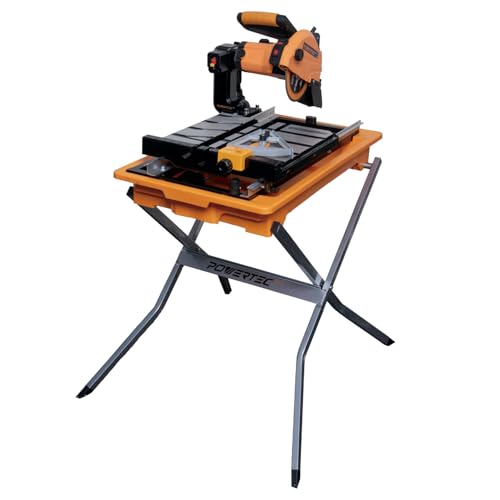
Use a flat, supported tile and keep the cut line fully on the 17″ x 16-3/4″ aluminum table before the first pass.
If you want to see how the machine handles various materials, explore our full review of the TLS1003.
TLS1003 cut capacity and water feed details
That combination matters for a tile saw buyer because large-format porcelain can push a blade off line when the rail, water feed, or table support is short on consistency. We selected this product for a full review because its listed figures speak directly to that risk. What is the maximum physical size the saw can accommodate? It handles rip cuts up to 24 inches and diagonal cuts up to 18 inches. The water system includes a pump, removable nozzles, a wrap-around splash guard, and a baffled inner-guard system, but the reservoir depth is not stated. The listing also does not name a specific coolant beyond water feed from the pump.
For a definitive summary of the performance, view the final verdict on the TLS1003.
What to Check Before Buying the TLS1003
- Measure your largest tile first. The saw lists a 24-inch rip capacity and 18-inch diagonal cuts.
- Check your tile material. The listing names ceramic as the surface recommendation, while porcelain is the harder job that raises the wandering risk.
- Confirm your cut depth need. The adjustable cutting depth goes to 2-1/4 inches.
- Look at your power setup. The saw is corded electric, so you need outlet access where you plan to cut.
- Check your workspace for support. A 66-pound saw with a stand needs stable placement before long cuts.
- Plan for alignment help. The laser alignment system and LED illumination can help you track the line on a long cut.
Where the TLS1003 Fits in the Wet Tile Saw Range
The TLS1003 sits in the wet saw group that favors guided cuts over dry, dusty cutting. Its 7-inch blade and 1.5 HP motor place it in a lighter class than the 10-inch portable saws many remodelers use for larger jobs. If you need the broadest cut depth, more blade size options, or a heavier bridge-saw layout for oversized stone, you should look at other product types. If your work is mostly ceramic, backsplash work, or smaller porcelain runs, this format makes more sense than a larger, harder-to-move saw.
You can find a quick summary of the pros and cons in the TLS1003 quick verdict section.
Choose TLS1003 if you want a corded wet saw with a stand, laser guide, and 24-inch rip capacity for smaller to mid-size tile work. It suits you best when your cuts stay inside its listed size limits and you value guided alignment over maximum capacity.
New users should look at our guide for the top-rated wet tile saw for beginners.