
New Hardware is reader-supported: some links on this page are affiliate links, and as an Amazon Associate New Hardware earns from qualifying purchases at no extra cost to you. Learn more.
Miter saws come in three meaningfully different types, split by blade diameter: up to 10 inches, 10 to 12 inches, and 12 inches and up. If your work includes wide boards, baseboard, or repeated compound cuts, the blade size and crosscut capacity matter first. Measure the widest stock you need to cut in one pass, then compare it with the saw’s stated cutting width.
If you prefer portability over a cord, see our comparison of the best cordless miter saw models.
Miter Saw Types Among the Listings We Screened
| Type | What sets it apart | Listings we screened | Price range | Median bevel range |
|---|---|---|---|---|
| Compact Miter Saw | blade diameter up to 10in | 41 | $119 to $1028.30 | 48 degrees |
| Standard Miter Saw | blade diameter 10 to 12in | 20 | $139 to $1099 | 46 degrees |
| Large-Capacity Miter Saw | blade diameter 12in and up | 1 | $449 | – |
Counted over the 71 listings this site screened; a listing that does not state the figure a type is defined by is not counted under any type.
New users should look at our guide to the best miter saw for beginners.
Where these choices show up in our reviews
Prices across these 3 run from $449 to $1099; each one has a full review here.
To handle larger materials, view our guide to the best sliding miter saw.
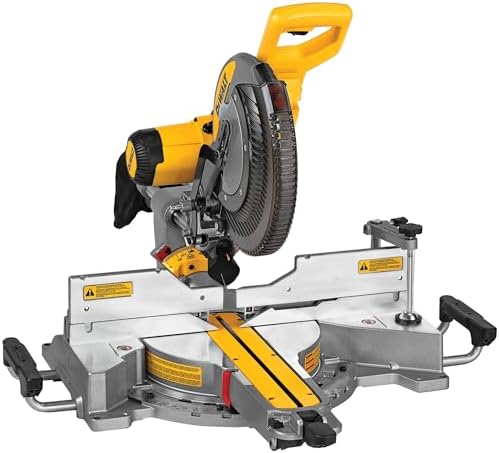

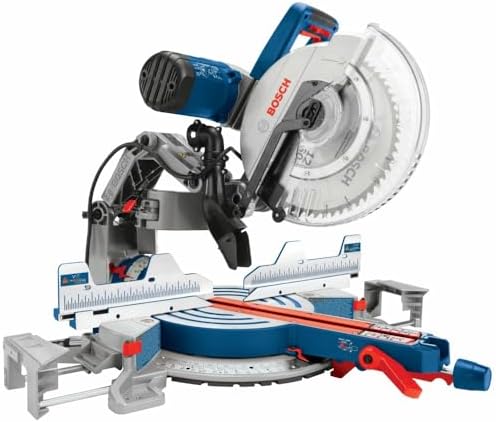
Compact Miter Saws
Compact miter saws use blades up to 10 inches and suit trim work, framing, and other jobs that do not need wide crosscuts. Among the miter saw options we evaluated, this type carried the broadest price spread, which reflects how much the feature set can vary within the small-blade class.
Many homeowners find success using the best miter saw for home projects.
Compact miter saws trade board width for portability
Compact saws give up crosscut width before they give up bevel range. That trade matters when you need to cut casing or narrow stock quickly, but not when a single pass has to clear a wide board. If you are setting up for punch-list work, portability and lower entry cost usually matter more than maximum board width.
If space is limited, see our guide to the best miter saw for small workshop use.
When a cut has to happen in one pass, the risk is a return or a second setup. A compact saw can still be the right choice if your stock stays narrow and your cuts are mostly repetitive.
You can also learn about industry certifications and safety standards for miter saws.
Standard Miter Saws
Standard miter saws use 10- to 12-inch blades and cover the middle of the category. They are the most balanced type for buyers who need both everyday trim capacity and more room for wider stock than a compact saw usually allows.
For a complete overview, see our guide on how a miter saw works.
Standard miter saws balance trim work and wider crosscuts
This type gives you the broadest overlap between general-purpose trim work and larger crosscuts. The median bevel range in this group was 46 degrees, which is enough context for compound cuts without making the saw a specialist in one direction. If your work shifts between casing, baseboard, and wider boards, this is the type that avoids the fastest compromises.
Budgeting is easier when you see what miter saws cost at each price level.
The comparison matters because the standard group is where buyers usually start asking for wider capacity without moving into a larger saw footprint.
To understand technical jargon, see our guide to miter saw terms and specs.
Large-Capacity Miter Saws
Large-capacity miter saws use 12-inch blades and up, and they are the only type here built around maximum crosscut room. This is the type for larger stock, wider baseboard, and work where a single pass matters more than size or simplicity.
Users should also research how to choose the correct bevel direction.
Large miter saws offer the most cutting capacity
The advantage is capacity. The compromise is that this class sits at the far end of the category, so it makes sense only when your material size justifies it. If you routinely cut wide trim or heavy stock, the extra blade size is the reason to choose this type rather than a smaller one.
It is important to learn how to choose the right blade diameter.
None of the other types in this page state a blade size that large, so the decision turns on width, not on bevel range or marketing language. Bosch GCM12SD is the benchmark glide saw for rail clearance and cut capacity, and that makes the large-capacity class the closest place to look when those two needs matter together.
Detailed specifications are available in our full review of the LS1018.
Miter Saw Type Comparison
| Type | Best-fit buyer | Main advantage | Main compromise |
|---|---|---|---|
| Compact Miter Saw | Trim-focused work and tighter budgets | Lower entry cost and smaller footprint | Less crosscut width for wider stock |
| Standard Miter Saw | General-purpose remodeling and finish work | Balanced capacity for most jobs | Not as space-saving as a compact saw |
| Large-Capacity Miter Saw | Wide boards and larger trim profiles | Maximum cut room in this category | Only sensible when width demand is real |
Which miter saw type fits your work?
Choose the compact type if your widest material stays narrow and you care more about price and footprint than cut width. Choose the standard type if you need one saw for mixed trim and general carpentry. Choose the large-capacity type if your work regularly forces wide stock through the saw in one pass.
You can find more details in our full review of the R255SMSDB+.
Choosing the right miter saw blade size avoids extra setup
If your cuts are mostly casing and short boards, the smaller blade class keeps the purchase simpler. If your jobs include baseboard, wider boards, or repeated compound cuts, the middle or large class reduces setup changes. The wrong choice costs time in repositioning, and it can force a second tool later.
Technical data is available in our full review of the P553.