
New Hardware is reader-supported: some links on this page are affiliate links, and as an Amazon Associate New Hardware earns from qualifying purchases at no extra cost to you. Learn more.
A miter saw is a power saw that makes angled cuts in boards and trim with a rotating blade. You need one when repeatable angle cuts matter more than freehand cutting, especially for framing, casing, and baseboard. Measure the widest stock you need to cut in one pass before you choose the saw size.
How a miter saw speeds up repeatable angle cuts
The problem it solves is speed and repeatability. A marked angle on a board is easy to miss with a hand saw, and the cut edge can wander. A miter saw locks the angle, supports the work, and cuts the same setting again and again.
How a Miter Saw Works
The blade spins down through the work, and the fence holds the board square while the angle setting controls the cut. That sequence is what turns a marked board into a repeatable miter or bevel cut. You set the angle first, clamp or hold the stock against the fence, then lower the blade through the cut line.
Space is often limited, so consider the best miter saw for small workshop setups.
- The miter scale shows the angle setting for repeatable cuts.
- The bevel scale shows the tilt setting for compound cuts.
- The fence supports and squares the workpiece for accurate cuts.
- The blade guard covers the blade for safer operation.
What sliding, single bevel, and double bevel add
A sliding compound miter saw adds rails, so the head moves forward and back as well as down. That rail system determines crosscut capacity, which matters when wide boards or trim need one clean pass. A single bevel head tilts one way only, so compound cuts require flipping the work; a double bevel head tilts left and right, which saves that repositioning.
Miter Saws we have reviewed in detail
Prices across these 3 run from $139 to $635; each one has a full review here.

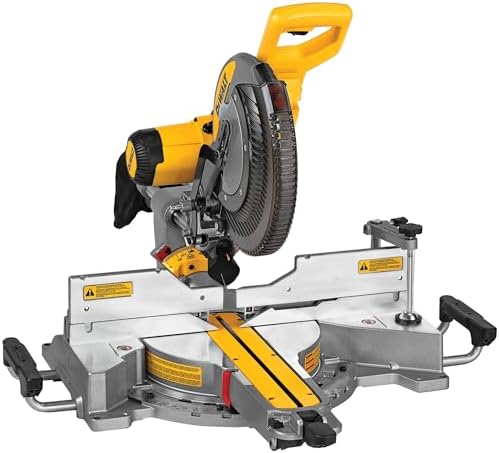

Miter Saw Parts That Change the Cut
The blade guard, fence, miter scale, and bevel scale change how safely and accurately the saw works. Each one affects a different part of the cut, so a buyer should match them to the kind of work planned.
If you prefer portability, view our comparison of the best cordless miter saw models.
How the blade guard and fence affect accuracy
The blade guard covers the blade when it is not cutting, and the fence keeps the board aligned against the back of the saw. If the fence is short or awkward for long trim, you spend more time holding the work steady. The guard matters for safe clearance, but the fence decides how repeatable the cut line stays.
What the miter scale and bevel scale change
The miter scale sets left and right angle cuts, while the bevel scale sets the blade tilt for compound cuts. If you only need straight trim cuts, the bevel scale may matter less than the miter scale. If you cut crown or casing, the tilt setting becomes part of the result, not just a convenience.
Single bevel versus double bevel
Single bevel means the head tilts one way only, so you flip the work for the opposite angle. Double bevel tilts both left and right, which speeds repeated angled cuts and reduces repositioning. If your work includes many mirrored cuts, double bevel saves time; if not, single bevel can keep the saw simpler.
For a deeper look at the 12-inch model, see our full DWS715 spec breakdown.
Sliding compound miter saw capacity
A sliding compound miter saw uses rails to move the blade head forward and back. That format changes crosscut capacity more than it changes angle control. If your boards are wide, the slide matters; if your cuts are narrow and repetitive, a non-sliding saw can cover the job with less bulk.
What a Miter Saw Changes in Practice
A miter saw changes the work when you need the same angle many times. It also changes the work when a board is too wide or too awkward for a hand saw to keep square. The benefit shows up most in trim, framing, and repeat cuts where a marked angle has to stay consistent.
It does not change every job. Rough demolition, straight rip cuts, and long sheet goods usually belong to other tools. If your work rarely needs repeatable angles, you may pay for capacity you will not use.
You can find the technical details in our full R255SMSDB+ review to see how it performs.
How price changes miter saw capacity and features
Budget matters here. A less expensive saw often gives you the basic angle cuts, while a pricier one usually buys more capacity, a slide, or a second bevel direction. If your project list is short, the extra mechanism may not repay itself.
Miter Saw Questions Buyers Ask
How much room do I need behind it for the slide and blade to move?
You need enough rear clearance for the head and rails to travel through the full cut. A sliding compound miter saw needs more room behind the fence than a non-sliding saw, because the blade head moves back before it drops. Measure the bench depth and wall clearance first, then add space for the longest board you expect to cut.
What am I giving up at this price compared with a more expensive saw?
You are usually giving up crosscut capacity, a second bevel direction, or smoother rail travel. Lower prices often mean a simpler single bevel layout and less room for wide stock. If your cuts stay small and one-sided, those tradeoffs may not matter.
Check out how the P553 performs in our detailed spec analysis.
Is it worth the price for a saw in this class, or am I paying for features I won’t use?
It is worth the price when the saw matches the cuts you repeat most often. If you only need basic miter cuts, a simpler saw can do the job without the extra rail system or double bevel hardware. If you cut crown, baseboard, or wide trim often, those features earn their place faster.
Is the glide system smoother and less bulky than a regular sliding miter saw?
A glide system is designed to move the head without the long rear rails used on many sliding saws. That usually reduces the space the saw needs behind it and can make the front motion feel less obstructed. The tradeoff is still capacity and price, not just compactness.
Is it worth paying this much, or am I mostly paying for the glide system and bigger capacity?
Most of the extra cost in this class usually comes from the glide system, the larger crosscut range, and the added hardware around that motion. If you do not need wide cuts or a cleaner wall-side setup, the price jump may buy more mechanism than you need. If your work includes large trim or repeated wide stock, that added capacity is the reason to pay more.
We provide a complete look at how the C10FCH2 performs for your research.
Who Needs a Miter Saw and Who Does Not
You need a miter saw if you cut trim, framing, or molding often enough that angle repeatability matters. You also need one if your work includes compound cuts or boards too wide for a hand saw to guide cleanly. If your projects are mostly straight cuts, sheet goods, or rough demolition, you do not need this category first.
Choosing the simplest saw for your actual cuts
If you work in a small shop or on a crowded bench, choose the simplest saw that covers your widest cut. If you have room, repeated angled cuts, and a need for faster mirrored work, a sliding or double bevel model makes more sense. The right choice is the one that matches the cuts you actually make.