
New Hardware is reader-supported: some links on this page are affiliate links, and as an Amazon Associate New Hardware earns from qualifying purchases at no extra cost to you. Learn more.
Our Top 3 Sliding Mitre Saws
The picks are right below, in order. Everything after them is the reasoning, if you want it.
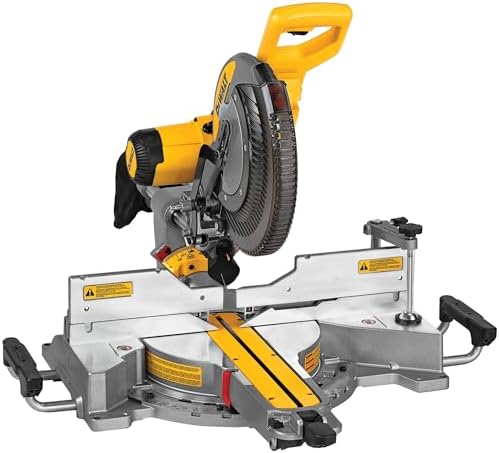
#1 – DEWALT DWS779 Miter Saw
Best for: you want a 12-inch, double-bevel sliding miter saw with 49-degree bevel travel and a 15-amp motor.
Why the DEWALT DWS779 Miter Saw is our #1 pick
- Listed at $635 in November 2026 – premium among those compared; the price moves, so check it
- 4.8 rating from 9,013 ratings
blade diameter: 12 Inches · bevel range: 49 to the right and left
For comparison on blade diameter, pick #2 states 12-inch and pick #3 states 10-Inch.

#2 – DEWALT Double-Bevel Sliding Miter Saw
Best for: you want a 12-inch sliding saw with double-bevel cuts and a lower price than the first pick.
Why the DEWALT Double-Bevel Sliding Miter Saw is our #2 pick
- Listed at $449 in November 2026 – mid-range among those compared; the price moves, so check it
- 4.8 rating from 2,445 ratings
blade diameter: 12-inch · bevel range: 0 to 49 degrees
Against the other picks on blade diameter, pick #1 states 12 Inches and pick #3 states 10-Inch.

#3 – DOVAMAN DMS01A-Upgraded 10-Inch Sliding Miter Saw
Best for: you want a lower-cost sliding saw with a 10-inch blade, built-in laser guide, and 4 x 13-inch cutting range.
Why the DOVAMAN DMS01A-Upgraded 10-Inch Sliding Miter Saw is our #3 pick
- Listed at $141.99 in November 2026 – entry among those compared; the price moves, so check it
- 4.5 rating from 685 ratings
blade diameter: 10-Inch · bevel range: 0-45
To put that blade diameter in context, pick #1 states 12 Inches and pick #2 states 12-inch.
How New Hardware picked: we started from the 200 most-reviewed miter saw listings in our retail dataset, removed duplicates, accessories and off-category products, and 71 qualified. The picks on this page were selected from those 71 candidates against this topic’s requirements. The order of the picks reflects fit to this topic; each shows its rating and the number of ratings behind it, so you can weigh how much to trust it. Specifications come from manufacturer listings and ratings from verified Amazon buyer reviews (data checked November 2026).
The Verdict, and the Basis for It
A sliding miter saw earns its keep when the cut width, not the blade size alone, decides whether the board finishes in one pass. That is why crosscut capacity matters more than headline power for this roundup.
The DWS779 fits that job with a 12 Inches blade and a 2 x 14 crosscut capacity. Choose the DEWALT Double-Bevel Sliding Miter Saw instead if you want a lower entry price at around $449 and still want a 12-inch sliding layout.
We screened 71 Miter Saws at New Hardware and kept 10 for this page because we were looking for sliding saws that could handle trim and framing work without wasting money on unused capacity. The shortlist runs from $141.99 to $635, and the median price of the 10 products in our comparison is $449.
Check the setup and warranty notes to see the power requirements and support options.
Visit the FAQ for answers to common questions about miter saw operation.
Consult the buying guide to learn how to evaluate different saw models.
Mitre Saws: The Findings in Brief
- Top pick: DEWALT DWS779 Miter Saw at $635 (blade diameter: 12 Inches).
- Also picked: DEWALT Double-Bevel Sliding Miter Saw at $449; DOVAMAN DMS01A-Upgraded 10-Inch Sliding Miter Saw at $141.99.
- We compared 10 Miter Saws, from $141.99 to $1099, median $449.
- Best buyer rating in the comparison: DEWALT DWS779 Miter Saw at 4.8/5 from 9,013 ratings.
Full Comparison Table of Mitre Saws
| Product | Price | Rating | blade diameter | motor power | bevel range for angled cuts |
|---|---|---|---|---|---|
| DEWALT DWS779 Miter Saw | $635 | 4.8 (9,013 ratings) | 12 Inches | 15 Amp | 49 to the right and left |
| DEWALT Double-Bevel Sliding Miter Saw | $449 | 4.8 (2,445 ratings) | 12-inch | 15 amp | 0 to 49 degrees |
| DOVAMAN DMS01A-Upgraded 10-Inch Sliding Miter Saw | $141.99 | 4.5 (685 ratings) | 10-Inch | 15Amp | 0-45 |
| Delta 12-Inch Sliding Miter Saw | $424.99 | 4.5 (85 ratings) | 12 in. | 15 Amps | — |
| Bosch GCM12SD 12 In. Dual-Bevel Glide Miter Saw | $1099 | 4.7 (2,031 ratings) | 12 Inches | 15 Amp | 47 LEFT/47 RIGHT |
| Bosch CM10GD | $678.04 | 4.7 (675 ratings) | 10 Inches | 15 Amp | 90 Degrees |
| DEWALT DWS715 12-Inch Miter Saw | $449 | 4.8 (6,853 ratings) | 12 Inches | 15 Amp | 0 degree – 48degree to the left and 0 degree- 3degree to the right |
| DEWALT DWS716 Miter Saw | $449 | 4.7 (451 ratings) | 12-Inch | 15 Amp | 0 degree – 48 degree |
| WEN MM1215 12-Inch Dual Bevel Sliding Miter Saw | $204 | 4.2 (204 ratings) | 12-Inch | 15-Amp | 45 degrees |
| Ryobi ONE+ Sliding Miter Saw | $171 | 4.7 (77 ratings) | 7-1/4 in. | Not stated | 45 Degrees |
Prices are approximate and move frequently – check the current price before deciding. “Not stated” means the manufacturer listing does not give that figure – we do not estimate it.
Among our top picks, the value leader is DOVAMAN DMS01A-Upgraded 10-Inch Sliding Miter Saw, and that matters here because it pairs the lowest motor-power cost with a sliding miter saw format.
Each Miter Saw We Picked, Reviewed
The 3 picks below are reviewed in the same order as the cards above.
DEWALT DWS779 Miter Saw
That mix favors you if crown molding cutting and framing both matter, because the saw handles wide stock and repeated angled cuts without moving to a smaller format.
What we like: The 12-inch blade gives you the larger blade size used for wider crosscuts in this category. Its double bevel layout matters for repeated angled work, because the head tilts both ways instead of forcing you to flip stock for every compound cut. The dust collection claim says it captures over 75% of dust, and the work clamp and blade wrench add useful setup support.
Keep in mind: At around $635, this is the priciest pick here. If your cuts stay in lighter trim work, the extra capacity may cost more than you need.
DEWALT Double-Bevel Sliding Miter Saw
This DEWALT sliding miter saw makes the list because it keeps the same 12-inch blade size, 2×14 crosscut capacity, and double-bevel format as the higher-priced model, but at around $449. That makes it the value play for you if you want a dual-bevel sliding saw without paying for the most expensive option in the group.
What we like: The 15 amp motor gives this saw the same current draw as the other corded picks here. Its 12-inch blade supports the wider crosscut class, and the double bevel design speeds repeat angle changes because the head tilts left and right. The dust collection system captures over 75% of dust, and the integrated cutline blade positioning system plus XPS LED shadow line technology help with alignment.
Keep in mind: The weight is 54.6 pounds, so this is not the lightest saw in the set. If portability matters more than capacity, a 10-inch model may make more sense.
DOVAMAN DMS01A-Upgraded 10-Inch Sliding Miter Saw
The DMS01A is here because it gives you sliding capacity at a much lower price, around $141.99, while still listing a 10-inch blade, 4 x 13 inch cutting range, and 15 amp motor. That combination suits you if budget matters most and you still want a sliding saw for trim work and smaller framing jobs.
What we like: The 4 x 13 inch maximum cutting range is the key number here, because it tells you the saw can handle wider boards than a fixed non-sliding model of similar blade size. Its 0-45 bevel range covers standard compound cuts for crown molding cutting, and the built-in laser guide helps mark the cut line. The package also includes three TCT blades and extendable side tables.
Keep in mind: A 10-inch sliding saw usually gives up some crosscut headroom compared with 12-inch models, so this is the one to skip if you often cut wide baseboards or large stock. The bevel type is not stated, so check that detail if you need a specific tilt direction for your workflow.
Review our coverage scope to see which specific brands and models are included.
View the comparison table to see the technical specifications side by side.
Use the audience checklist to find the best match for your specific skill level.
If you are working in a tight space, view our best miter saw for small workshop options.
What Matters Most in a Miter Saw
Slide Travel For Wider Boards
Look for enough slide travel to handle the boards you cut most often, because sliding capacity is what lets you crosscut wider stock in one pass. The DWS779 states a 2 x 14 capacity, the other DEWALT sliding model also states 2×14, and the DOVAMAN lists 4 x 13 Inch, which suits budget framing work better than narrow trim-only saws. Bosch GCM12SD is the benchmark glide saw for rail clearance and cut capacity, and that reference matters here because slide travel is the feature that separates a wide-cut saw from a compact one. If you cut trim and framing often, prioritize the stated crosscut figure over extra extras.
Bevel Range For Angled Cuts
Weigh bevel range against the angled cuts you actually make, because the bevel setting controls the sideways tilt used for compound work. The DWS779 states 49 degrees to the right and left, the other DEWALT lists 0 to 49 degrees, and the DOVAMAN states 0-45, which is enough for standard compound cuts used in crown and casing. The 45° bevel reference marks the point where standard compound cuts become available in this category, and the DOVAMAN’s stated range sits right at that practical line. If you cut repeated angles, a double-bevel layout saves flipping the work.
Blade Diameter And Cut Depth
Choose blade diameter with the stock you need to cut, because blade size sets the saw’s basic cut envelope. The two DEWALT picks use 12-inch blades, while the DOVAMAN uses a 10-Inch blade, so the larger blades suit wider trim and framing jobs better. A carbide-tipped blade matters here because it affects cut quality and lifespan, and the DWS779 states stainless steel blade material rather than a carbide-tipped blade in the data provided. For trim, flooring, or framing, match the blade size to the largest workpiece you expect to cut, then check the stated capacity next.
Fence Stability At Full Extension
Check fence stability at full extension when you plan to cut crown or base molding, because the fence supports the work while the saw reaches its full cutting position. The DWS779 states support for crown molding up to 7-1/2 in. nested and base molding up to 6-3/4 in. vertically, and the other DEWALT model lists tall sliding fences for crown support in its specs. Miter detent stops also matter here, because they set repeatable angle settings; the DWS779 states 10 positive stops on its stainless-steel detent plate. If you repeat the same angles often, detent stops save setup time more than another small increase in blade size.
Dust Collection At The Cut Line
Look for dust collection that states a percentage, not just a yes-or-no claim, because the cut line is where visibility matters most. The DWS779 says it captures over 75% of dust, and the other DEWALT model says the same figure, so both give you a stated dust-control number instead of a vague promise. The DOVAMAN lists dust collection in the comparison data only as part of the overall set, so the exact percentage is not stated there. If you work indoors or on finish cuts, use the stated dust figure as a filter before you compare price.
Explore the detailed reviews for an in-depth look at each individual saw.
See our top picks for a ranked list of the best saws available.
Determine your job requirements to find the minimum power and capacity you need.
You can also see our full Bosch CM10GD spec breakdown for deeper details.
Make sure to review miter saw terms and specs explained before you make a final purchase.
What Each Job Takes, Worked Out for These Picks
Each row is a job this page’s buyers ask about, worked out from each pick’s listed crosscut capacity and motor power and a typical need for the job.
| What you want to do | What it takes | How each pick does |
|---|---|---|
| Cut baseboard for a living room install in one pass | at least 7 to 12in | DEWALT DWS779 Miter Saw: not stated; DEWALT Double-Bevel Sliding Miter Saw: not stated; DOVAMAN DMS01A-Upgraded 10-Inch Sliding Miter Saw: not stated |
| Cut wide shelving boards in one pass | at least 10 to 14in | DEWALT DWS779 Miter Saw: not stated; DEWALT Double-Bevel Sliding Miter Saw: not stated; DOVAMAN DMS01A-Upgraded 10-Inch Sliding Miter Saw: not stated |
| Run a cordless saw all afternoon on trim and framing cuts | at least 15 to 20A | DEWALT DWS779 Miter Saw: only at the easier end (15A); DEWALT Double-Bevel Sliding Miter Saw: only at the easier end (15A); DOVAMAN DMS01A-Upgraded 10-Inch Sliding Miter Saw: only at the easier end (15A) |
| Cut long deck boards without repositioning them | at least 8 to 12in | DEWALT DWS779 Miter Saw: not stated; DEWALT Double-Bevel Sliding Miter Saw: not stated; DOVAMAN DMS01A-Upgraded 10-Inch Sliding Miter Saw: not stated |
What each job takes is a typical figure, not a manufacturer claim, and every result is worked out from the pick’s listed specifications. Check your own job against them before you order.
Who Buys Mitre Saws, and What It Really Costs
Who buys a mitre saw, and what each one needs
- Trim carpenters — need a sliding compound miter saw with 12-inch blade capacity for wider baseboard and casing cuts
- Cabinet installers — need enough crosscut capacity to cut wide panels and face-frame parts in one pass
- Finish carpenters — need double bevel for repeated angled cuts without flipping the work
- DIY homeowners remodeling rooms — need a 45° bevel for common crown and casing cuts
- Apartment landlords doing turnovers — need a corded 15-amp or cordless 20V MAX ecosystem choice for shop use or portable jobs
- Woodworking students — need a saw that can handle trim, framing, and general-purpose crosscuts with a 10-inch blade or larger
What a miter saw really costs, and where to buy one
What to budget for on top of the miter saw
- Saw stand — supports long stock so wide trim and boards stay aligned
- Extra blades — different tooth counts change how cleanly the saw cuts wood
- Clamps — hold workpieces steady during angled cuts
- Dust collection bag or vacuum hose — reduces sawdust around the cut line
- Extension cord or spare battery — powers the saw when the jobsite layout or runtime demands it
What you can leave out of the budget
- Laser guide — the cut line can be set with the fence and blade marks
- Miter saw crown stops — useful for repeat work, but not needed for basic trim cuts
- Dedicated mobile cart — unnecessary if the saw stays in one shop location
- Specialty non-wood blades — not needed if you are only cutting wood trim and framing stock
Where this kind of product is normally sold
- Home improvement chains — usually offer easy returns, in-store pickup, and bundled stands or blades
- Tool specialty retailers — often provide wider spec comparisons, warranty help, and staff who know saw formats
- Online marketplaces — broad price spread and many seller options, but return handling depends on the seller
- Warehouse clubs — limited selection, sometimes bundled accessories, and pricing that can move with membership offers
- Local lumberyards with tool counters — useful for buyers who want advice and easier follow-up on shop purchases
Before the First Use, and After Delivery
What these sliding miter saws need before they work
Every saw here needs a 120V corded power source and a matching miter saw blade with the right arbor size, because the motor and blade do nothing without both.
- DMS01A uses a 10-inch blade, so its replacements need the smaller diameter.
- DWS779 includes a work clamp and a blade wrench, while the DEWALT Double-Bevel Sliding Miter Saw also states both items; DMS01A does not state either one.
- Do you already own a dust extractor or shop vac? DWS779 and the DEWALT Double-Bevel Sliding Miter Saw both state dust collection, while DMS01A states a built-in laser guide instead.
What to check when your sliding miter saw arrives
Cover differs by seller and country, so check the saw itself first.
- Confirm the blade diameter on arrival, because a 12-inch saw and a 10-inch saw take different replacement blades.
- Check that the arbor size matches your replacement blade, since that is what locks the blade to the saw.
- Look over the work clamp and blade wrench if they are part of your order, because DWS779 and the DEWALT Double-Bevel Sliding Miter Saw state both accessories and DMS01A does not.
On the day it arrives, mount the blade, check the arbor fit, and make the first cut while the return window is still open.
Questions Buyers Ask Before Choosing Mitre Saws
Do I need a dual-bevel sliding miter saw, or is single-bevel enough?
Single-bevel is enough when you do not mind flipping the work for mirrored compound cuts. A dual-bevel sliding miter saw saves that repositioning, and both DEWALT picks here state double bevel. DOVAMAN’s bevel range is 0-45, so it covers angled cuts, but it does not state a double-bevel head.
Will the saw be too heavy or bulky for my bench, garage, or jobsite setup?
The saw that suits a bench, garage, or jobsite setup depends on both weight and footprint. DWS779 lists 56 pounds, the DEWALT double-bevel model lists 54.6 pounds, and the DOVAMAN lists 13 inches of sliding rail length plus 4 x 13 inch cutting range. If your carry limit is tight, the 54.6-pound DEWALT is slightly easier to move than the 56-pound DWS779.
Which sliding miter saw gives the widest crosscut capacity?
The sliding miter saw with the widest crosscut capacity in this group is the DWS779 and the DEWALT double-bevel model, both listed at 2 x 14. That figure matters for wide stock because crosscut capacity measures the widest board cut in one pass. DOVAMAN lists 4 x 13 inch, which is a different format and should be read as its own maximum cutting range.
Which saw is the better budget pick for a first sliding compound miter saw?
If your budget is tight, the DOVAMAN DMS01A-Upgraded is the first sliding compound miter saw to look at here. It is around $141.99, and it still states 15 amp power, a 10-inch blade, and a 4 x 13 inch maximum cutting range. That mix favors buyers who want sliding capacity without paying for the 12-inch DEWALT tier.
Who Should Skip These Miter Saws
If your work needs wider crosscuts than these picks state, these are the wrong tool. A 12-inch sliding miter saw handles larger stock better than a 10-inch saw, but the picks here are still built around trim, framing, and general shop cuts, not oversized sheet goods or long structural pieces.
Go to a larger sliding compound miter saw, or a 12-inch glide saw if you need more reach and less repositioning. Think of it like choosing a longer ladder for a taller wall: the task decides the size, not the label. If wrong bevel direction or a single-bevel limitation would slow your compound cuts, look for double-bevel sliding saws instead, or read best compound miter saw.