
New Hardware is reader-supported: some links on this page are affiliate links, and as an Amazon Associate New Hardware earns from qualifying purchases at no extra cost to you. Learn more.
Miter saw warranties usually run about 1 to 3 years, and the most common refusal is a claim with no proof of purchase or no serial number. If you buy a saw for regular jobsite use, check the document for registration rules, because a missing receipt often ends the claim before the fault does.
What a miter saw warranty usually covers and excludes
A miter saw warranty is a written promise to repair or replace specified parts for a stated period, usually 1 to 3 years. The coverage changes when wear parts, misuse, or missing records enter the claim, so your first check is the list of covered parts and the paperwork needed.
If you are just starting out, see our guide to the best miter saw for beginners.
Think of warranty coverage like a ticket with a printed seat number: it helps only when the claim matches the seat on the ticket.
What a typical miter saw warranty usually covers:
For larger cuts, view our rankings of the best sliding miter saw.
- Motor faults that appear during normal use.
- Electrical switches, cords, and other factory-installed wiring parts.
- Defects in the saw’s frame, guards, or factory assembly.
- Gear or drive issues that are not linked to misuse.
- Repair labor, replacement parts, or a unit exchange, depending on the document.
What a typical miter saw warranty usually does not cover:
You can find the top-rated miter saw for home projects on our roundup.
- Blades, brushes, belts, fuses, and other wear items.
- Damage from drops, impacts, water, or jobsite abuse.
- Misalignment caused by adjustment errors or unauthorized repair.
- Normal wear from heavy daily use.
- Cosmetic marks that do not affect function.
When a claim is denied here, the cost is usually time, shipping, and a repair bill that lands outside the warranty window.
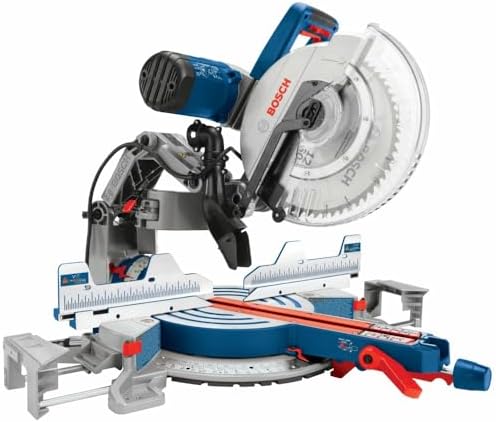
Examples from this category, each with its own review here
3 options shown here, $266.96 to $1099, each with its own full review behind its name.
Limited space? Explore the best miter saw for small workshop setups.


What buying source means for a miter saw claim
Where you bought the miter saw often decides whether the claim starts cleanly or gets extra checks. The same fault can be easy to process from one channel and hard to prove from another, so keep the purchase channel in view before you choose.
If you need mobility, see our comparison of the best cordless miter saw.
Direct from the maker usually gives the cleanest claim path
Direct purchase usually means the maker can match the serial number, sale date, and warranty record with less friction. That does not change the written terms, but it usually reduces the chance of a missing-record dispute.
An authorised retailer usually works if the receipt is complete
An authorised retailer is a seller the maker recognizes for normal warranty support. Claims from this channel usually need the receipt, the sale date, and the serial number, but they are usually treated like standard retail claims.
For precise finish work, see our picks for the best miter saw for trim work.
Marketplace sellers often add a proof problem
A marketplace seller is a third-party seller on a larger sales platform. The claim may still be valid, but the buyer often has to prove the seller was legitimate, the item was new, and the sale date matches the warranty period.
If you need versatility, explore our list of the best compound miter saw.
A marketplace listing can look like a normal retail sale and still fail at the paperwork stage.
Refurbished or open-box sales usually shorten the useful coverage
Refurbished or open-box means the saw was previously sold, returned, inspected, or repackaged. Coverage may be shorter, limited to parts, or tied to the refurbisher instead of the original maker, so the warranty document matters more than the box label.
Understanding your needs starts with knowing the crosscut capacity for miter saws.
Importer or grey-market sales often create the hardest claims
An importer or grey-market seller brings in stock outside the maker’s normal local channel. Claims can be delayed, rejected, or routed to a different region, because the serial number, region code, or service network may not match the local warranty system.
If you buy through a grey-market channel, you may lose local service access and spend time proving the saw belongs in your region’s warranty system.
You should also consider the required motor power for miter saws before buying.
What actions void a miter saw warranty
Warranty loss in this category usually comes from changes to the saw, not from ordinary ownership. The problem is often a repair or adjustment that breaks the maker’s chain of responsibility.
Make sure to verify the necessary bevel range for miter saws for your needs.
Unauthorized repair and parts changes usually void coverage
Opening the motor housing, replacing factory parts with nonapproved parts, or using an unapproved service shop often voids coverage. That matters because the maker can no longer separate a factory fault from a repair-related fault.
Misuse, overload, and wrong setup can end the claim
Using the saw outside its rated purpose, forcing cuts, or running it with the wrong blade type can void coverage when the damage traces back to misuse. A claim then fails on cause, not on the age of the saw.
Sometimes a different tool works better; explore the miter saw alternatives available.
Missing maintenance records can weaken the claim
Skipping basic maintenance, ignoring alignment checks, or failing to keep service notes can make a claim harder to approve. The saw may still be under time coverage, but the record can look incomplete.
We provide a detailed analysis in our full R255SMSDB+ spec breakdown.
If you are an upgrader, keep the old saw’s service history only as background; the new claim depends on the new saw’s own records.
What to keep before buying so a future claim works
Keep the receipt, serial number, and warranty document before the first cut. Those three items usually decide whether the claim moves forward or stalls.
You can find the technical data in our full P553 review.
- Save the dated receipt in paper and digital form.
- Photograph the serial number plate before the saw leaves the store or arrives at your door.
- Keep the warranty document, including any registration step and time limit.
- Record the seller name, order number, and delivery date.
- Check whether registration is required within a fixed number of days.
- Confirm whether the warranty is local, regional, or tied to the country of sale.
- Keep the original packaging until the return window and any inspection window end.
- Save service notes if the saw needs setup or repair during the coverage period.
The claim path is like a gate with three locks: proof of sale, proof of identity, and proof that the saw belongs in the right region.
See our data-driven analysis in our full HM1031A review.
Start with the warranty document, then match the receipt date to the coverage start date, then confirm the serial number is readable. If any one of those is missing, the claim usually slows down before anyone reaches the fault itself.
When extended warranty coverage is worth it for a miter saw
Extended coverage is worth considering when you use the saw often, rely on it for paid work, or cannot afford a long repair delay. It is usually not worth it when the base warranty already covers the time you expect to own the saw, or when the extension mainly repeats what the standard plan already includes.
You can find a detailed breakdown in our full C10FCH2 analysis.
Choose the extension only if it adds time, labor, or service access that the base document does not already give you. If it only adds paperwork, skip it and keep the proof of purchase instead.