
New Hardware is reader-supported: some links on this page are affiliate links, and as an Amazon Associate New Hardware earns from qualifying purchases at no extra cost to you. Learn more.
Compact band saw warranties usually run 1 to 3 years, and the most common refusal is wear or damage from consumables and misuse. If you own an older saw, check the warranty document for the exact term, then match it against the blade, battery, and charger situation you actually have.
What a compact band saw warranty usually covers and excludes
A compact band saw warranty usually covers defects in materials and workmanship for the saw body, motor, switches, and electronics. It usually excludes blades, normal wear, abuse, and damage from incompatible accessories or bad storage.
- Defects in the motor housing, gearbox, or internal wiring.
- Faulty switches, triggers, or electronic controls.
- Structural failures that appear during normal use and are not tied to misuse.
- Factory assembly problems that stop the saw from operating as intended.
- Replacement of a defective part, repair labour, or a unit swap, depending on the warranty terms.
- Blades, since they are consumables and wear out through use.
- Damage from dropped tools, impact, or forced cuts.
- Problems caused by rust, corrosion, or poor storage conditions.
- Battery packs and chargers when the warranty document treats them separately.
- Normal wear from regular cutting, including dulling, stretching, or finish wear.
Think of it like a car warranty that covers the engine, not the tires. The hard part is separating a part failure from wear, because a blade that dulls or a switch that fails get treated very differently.
New owners should see our guide for the best compact band saw for beginners.
Examples from this category, each with its own review here
3 options shown here, $160 to $300.64, each with its own full review behind its name.


What a warranty claim means depending on where you bought it
Where you bought the compact band saw changes who accepts the claim, what proof they ask for, and whether the warranty starts on sale date or manufacture date. Keep the receipt, seller name, and serial number together, because the claim path changes fast when those three do not line up.
What a direct-from-maker purchase means for a claim
A direct purchase usually gives the cleanest claim path. The maker can match the serial number, sale record, and warranty registration without a middle seller.
For heavy-duty projects, look at the best compact band saw for metal cutting.
If the paperwork is complete, the claim usually goes straight to the maker’s service process. If the registration is missing, the maker may still ask for proof of purchase and the purchase date.
What an authorised retailer purchase means for a claim
An authorised retailer purchase usually works the same way as a direct sale for warranty purposes. The key difference is that you need the retailer’s invoice, not just a card charge or marketplace message.
That invoice matters because it anchors the start date. Without it, the claim can stall while the seller is asked to confirm the sale.
Users with existing tools can find the best compact band saw for Milwaukee batteries.
What a marketplace seller purchase means for a claim
A marketplace seller purchase can be harder to claim if the seller is not authorised. The warranty may still exist, but the maker may require proof that the seller was approved for that region.
If the seller is a third party, the claim may depend on the seller’s own return policy first. That can leave you with a repair delay instead of a direct warranty repair.
What refurbished or open-box purchase means for a claim
A refurbished or open-box purchase often has shorter or narrower coverage. The warranty may cover only the refurbished unit, only specific parts, or only a limited period from the resale date.
Detailed specifications are available in our full FX2331-Z review.
Open-box claims often fail when the buyer assumes the original full warranty still applies. The document may instead treat the item as a resale with separate terms.
What an importer or grey-market purchase means for a claim
An importer or grey-market purchase often creates the weakest warranty position. The product may be genuine, but the regional warranty may not transfer into your country.
That means the claim can be refused even when the saw itself is authentic. The issue is not the tool’s identity; it is the market the warranty was written for.
Compare power features in our full 2529-20 review.
Which actions usually void compact band saw coverage?
Actions that usually void compact band saw coverage are the ones that make the failure look self-inflicted. The claim often dies on the first sign of modification, misuse, or non-approved parts.
- Using blades, batteries, or chargers that the warranty document does not approve.
- Opening the housing or altering internal wiring.
- Removing, damaging, or obscuring the serial number label.
- Using the saw for cuts outside the listed material or capacity limits.
- Ignoring lubrication, cleaning, or storage instructions that appear in the manual.
- Running the tool after visible damage, then asking for warranty repair.
- Using the saw in a way that produces impact damage, water damage, or contamination.
The usual mistake is treating a warranty like a blanket promise. It is closer to a ticket with rules printed on the back: break the rules, and the ticket stops working.
A buyer who fits the wrong blade, keeps the saw wet, and then files a claim usually loses time first. After that comes the repair delay, and sometimes the full replacement cost.
Get technical details in our full BSH180B review.
What to keep before buying so a future claim works
What you keep before buying decides whether a future claim can move. A warranty claim is paperwork first and repair second.
- Save the full receipt or invoice, not just a payment confirmation.
- Record the seller name, order number, and purchase date the day you buy.
- Photograph the serial number label before first use.
- Keep the warranty document, manual, and any registration confirmation together.
- Check whether the warranty starts on purchase date or manufacture date.
- Confirm whether blades, batteries, and chargers have separate coverage.
- Keep packaging long enough to prove the model, serial, and condition if the seller asks for it.
- Register the saw if the warranty document requires registration within a set period.
- Match the region on the warranty document to the region where you plan to claim.
Compact band saw claims need proof of purchase and authorised seller
One realistic path looks simple at the start. You buy the saw, file the receipt, and photograph the serial label. Then the claim asks for proof the seller was authorised, and the missing invoice turns a repair into a search through old email.
When an extended warranty is worth it for a compact band saw
An extended warranty is worth it when you will use the saw often, replace tools slowly, or depend on a repair instead of a spare. It is usually not worth it when the extension mainly duplicates coverage for a short-lived blade, a separate battery, or a saw you use only a few times a year.
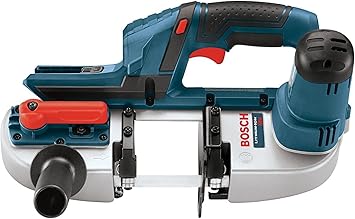
Another view of the tool is in the BSH180B 18V review.
Buy the extension only if the extra term is longer than the period you expect to keep the saw in active service, and if the document covers the parts most likely to fail. If the extension adds exclusions for blades, batteries, or commercial use, the value drops fast.
Confirm the exact term on the warranty document for the specific saw you are buying. The right answer is the one in that document, not the one implied by a listing page or a seller message.
The other small band saw guides we have published
- Which Compact Band Saw Is Best for Milwaukee Batteries?
- Choosing the Best Compact Band Saw for Electricians
- The Compact Band Saws That Work Best for Plumbers
- Which Compact Band Saw Is Best for Metal Cutting?
- Best Compact Band Saw for Tight Spaces Under $300
- One Handed Compact Band Saws Compared Under $300